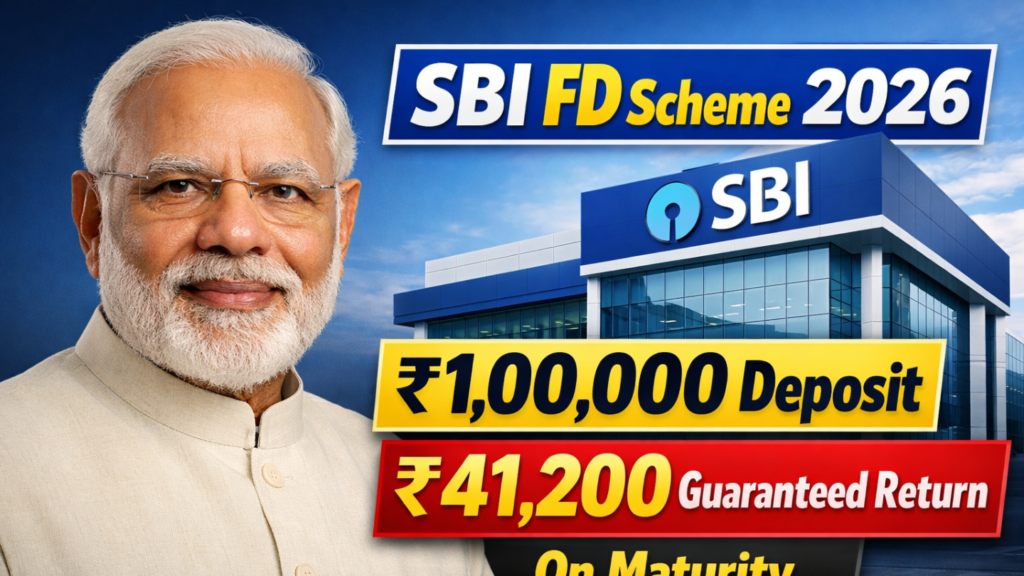
SBI FD Scheme 2026: Fixed deposit investors are now checking total maturity return and post-tax real income instead of only yearly interest percentage, and this maturity example directly targets that thinking. Claims like ₹41,200 maturity interest on ₹1 lakh deposit usually depend on tenure length and compounding structure, not just interest rate alone. SBI fixed deposits remain one of the most trusted low-risk investment options for conservative investors and retirees who want predictable capital growth without market volatility.
FD Interest Rate Structure Reality
Public sector bank FD rates usually stay between roughly 6 percent to 7.50 percent depending on tenure and customer category. Senior citizens often get extra 0.50 percent interest benefit. FD interest can be paid periodically or compounded and paid at maturity. Longer tenure FDs typically produce higher maturity gain because of compounding effect.
₹1 Lakh to ₹1.41 Lakh Maturity Math Reality
If maturity interest = ₹41,200
Total maturity value = ₹1,41,200
To reach this maturity gain, tenure would likely need to be around 5–7 years depending on interest rate and compounding frequency.
Example Calculation (Approx):
If interest rate ≈ 6.75% compounded annually
After ~6 years → Maturity may reach near ₹1.40–₹1.42 lakh
Exact value depends on compounding frequency and final interest rate lock.
Tenure Impact on Maturity Value
1 Year FD → Lower maturity gain but high liquidity.
3 Year FD → Balanced growth and flexibility.
5–7 Year FD → Higher maturity gain due to compounding.
Longer tenure helps lock interest rate but reduces liquidity flexibility.
Safety and Risk Protection
Bank FD is considered one of the safest investment tools. Deposits are insured up to ₹5 lakh per depositor per bank under deposit insurance framework. Capital risk is extremely low compared to equity or mutual fund investments. This makes FD suitable for emergency fund and retirement stability planning.
Taxation on FD Maturity Interest
FD interest is fully taxable as per income tax slab. TDS applies if yearly interest crosses threshold limits. Investors should consider post-tax return while planning long-term FD investments.
Who Should Consider This FD Structure
Retirees needing guaranteed maturity growth.
Conservative investors avoiding market risk.
Parents planning safe future fund.
Investors balancing risky and safe assets.
2026 Investment Planning Reality
FD works best when combined with other investments like PF, MIS, or debt funds. FD alone may not beat inflation long term but provides strong capital safety and predictable return. FD ladder strategy can help balance liquidity and return optimisation.
Disclaimer: This article is for informational purposes only. FD interest rates, compounding structure, taxation rules, and bank policies may change based on RBI policy and bank notifications. Investors should verify latest FD rates with bank before investing.