Patanjali Solar Panel System: Home electricity users are now focusing on real daily power generation, long-term bill reduction, and low installation entry cost instead of only panel watt rating, and this residential solar positioning directly targets those priorities. With electricity tariffs rising across India and rooftop solar awareness growing, middle-class homeowners are actively exploring solar installations to reduce monthly electricity expenses and achieve long-term energy cost stability.
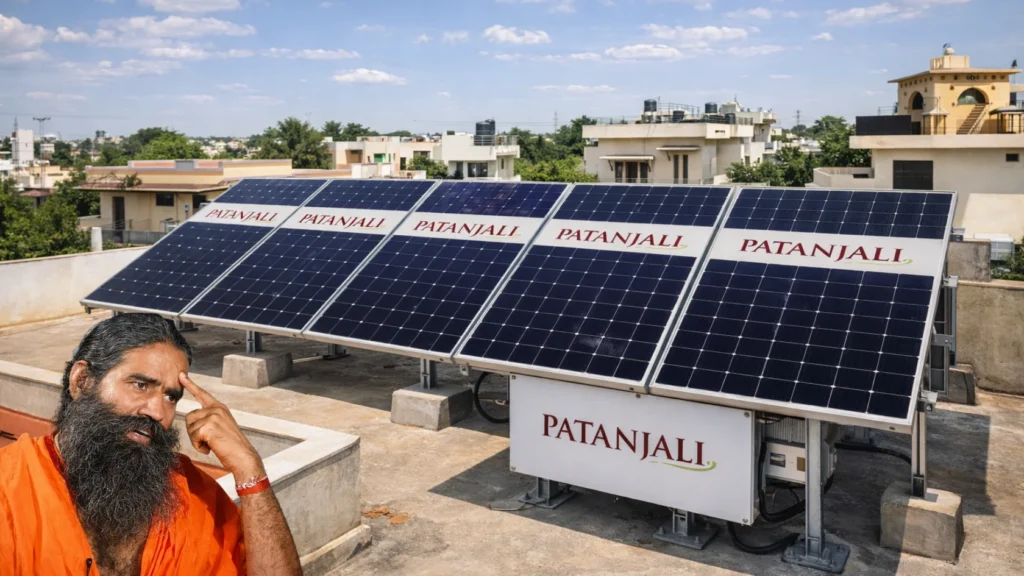
System Configuration and Rooftop Installation Setup
If designed to generate around 25 units daily, total rooftop solar capacity would likely fall between 4.5kW to 5kW system size depending on sunlight conditions and installation angle. This setup would likely include around 10–14 high-efficiency solar panels, grid-tied inverter, mounting structure, DC wiring, and AC safety unit. Shadow-free roof space requirement would likely stay near 350–450 square feet for optimal performance.
Daily Power Generation and Real Output
A 4.5kW–5kW rooftop solar system in Indian sunlight conditions typically generates around 22–28 units daily depending on state location, season, and roof direction. Annual generation could typically stay near 7,500–9,500 units. Peak output usually occurs during summer months while monsoon season output may reduce temporarily.
Electricity Bill Savings and Usage Impact
If system generates around 25 units daily, monthly generation could reach roughly 700–750 units. At ₹6–₹9 electricity tariff, realistic monthly savings could fall between ₹3,000 to ₹6,500 depending on home electricity consumption and net metering availability. Homes using heavy daytime loads like AC, washing machine, and water motor benefit more from solar usage.
Setup Cost Reality
If setup cost is expected near ₹62,000, this likely reflects heavily subsidised small capacity configuration or partial system cost. A full 5kW rooftop solar system typical installed cost usually falls between ₹2.5 lakh to ₹3.5 lakh before subsidy. After subsidy benefits, effective cost may fall near ₹1.7 lakh to ₹2.4 lakh depending on state policy and eligibility.
Warranty, Maintenance and System Life
Most Tier-1 solar panels typically offer 10–12 year product warranty and 25 year performance warranty ensuring roughly 80 percent output after 25 years. Inverter life typically stays near 8–12 years depending on brand quality. Maintenance mainly includes panel cleaning every 15–30 days depending on dust level. No fuel cost and minimal moving parts keep long-term maintenance predictable.
Disclaimer: This article is for informational and expectation-based analysis. Final pricing, subsidy eligibility, generation output, and installation configuration may vary based on location, government policy, and official company announcements. Buyers should verify details with authorised solar installation partners before installation.